
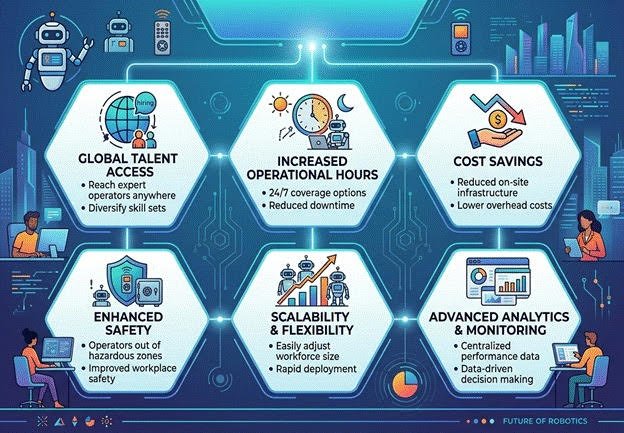
The landscape of commercial robotics is undergoing a seismic shift, with automated systems increasingly becoming the backbone of operations across sectors such as logistics, construction, healthcare, and retail. As businesses rapidly embrace robotic solutions to enhance efficiency and mitigate costs, a critical human element is emerging to support this technological evolution: remote robot operators. While robots excel at automating repetitive tasks and executing programmed directives, they often require human intelligence and adaptability to navigate complex, dynamic, or unforeseen situations. Hiring skilled remote robot operators allows companies to forge a powerful synergy between advanced automation and human oversight, leading to more robust, scalable, and intelligent operations. This approach is not just about managing machines; it’s about unlocking new levels of performance and safety that were previously unattainable.
What Are Remote Robot Operators?
Remote robot operators provide critical human-in-the-loop oversight, managing diverse robotic fleets across various industries from a central location.
Remote robot operators are highly trained professionals who remotely monitor, manage, and control robotic systems from a distance, often from a centralized operations center. They act as the crucial human-in-the-loop, providing essential oversight, decision-making capabilities, and intervention when automated systems encounter situations that fall outside their programmed parameters. Their responsibilities are multifaceted, typically including real-time monitoring of robot performance, assisting with navigation and task execution in complex environments, responding swiftly to unexpected events or anomalies, and ensuring the overall safe, efficient, and compliant operation of the robotic fleet. This skilled human oversight is instrumental in bridging the gap between fully autonomous operation and the unpredictable nature of the real world, significantly enhancing the reliability and effectiveness of commercial robotics.
1. Improved Operational Efficiency
One of the most compelling advantages of integrating remote robot operators into commercial robotics strategies is the significant boost in operational efficiency. These operators are adept at managing multiple robots simultaneously, ensuring a seamless workflow and minimizing downtime that can plague autonomous systems when they encounter unexpected challenges. By providing continuous, real-time support, remote operators can ensure that tasks are executed smoothly and promptly, thereby improving overall workflow coordination. This proactive management helps maintain consistent performance levels, even in dynamic or high-pressure environments. For instance, in the fast-paced warehouse robotics market, remote operators can oversee fleets of Autonomous Mobile Robots (AMRs), optimizing warehouse flow and ensuring order fulfillment processes run without interruption. This efficiency is further amplified by the ability of these operators to handle repetitive tasks with precision, allowing programmed robots to focus on their core functions while the operator manages exceptions and coordinates broader operational strategies. The adoption of robotics is fundamentally accelerated when businesses can assure consistent, efficient output through skilled remote management.
2. Enhanced Safety and Risk Management
Safety is paramount in any commercial operation, and the introduction of robots, especially in potentially hazardous environments, amplifies the need for robust risk management. Remote robot operators play a pivotal role in enhancing health and safety by removing human personnel from direct exposure to danger. In industries like construction and demolition, operators can control robotic demolition machines or heavy machinery from a safe distance, preventing injuries such as back strain or exposure to toxic materials. They continuously monitor robot performance and the surrounding environment, enabling quick responses to potential risks, such as unstable structures or unexpected debris. This human oversight is crucial for making critical safety decisions based on site-specific hazards, which even the most advanced automated systems might not fully interpret. For example, Autonomous Mowing Robot Operators can define and enforce the perimeter of the plan and keep-out areas for driverless zero-turn commercial mowers and RC Mowers, ensuring they operate safely without encroaching on pedestrian zones or sensitive landscaping. This preventative approach significantly reduces the likelihood of accidents and system failures, contributing to a safer work environment overall.
3. Reduced Operational Costs
The strategic deployment of remote robot operators can lead to substantial reductions in operational costs for businesses. Maintaining large on-site teams, especially for specialized robotic operations, can be expensive, involving not only salaries but also extensive training, equipment, and facility overheads. By centralizing operations and utilizing a skilled remote workforce, companies can significantly lower these expenses. The cost savings are manifold: reduced labor and training costs associated with on-site personnel, diminished infrastructure expenses, and more efficient resource allocation as a single operator can potentially oversee multiple robots or complex tasks. This model is particularly advantageous for companies looking to scale their operations without a proportional increase in fixed costs. Furthermore, by enhancing health and safety and preventing accidents, remote operations indirectly reduce costs associated with workplace injuries, downtime, and potential legal liabilities. This efficient model supports sustainable growth and allows businesses to reinvest resources into innovation and expansion.
4. Real-Time Problem Solving
While autonomous operation is a hallmark of modern robotics, even the most sophisticated programmed robots can encounter unforeseen circumstances that demand human judgment. This is where remote robot operators prove invaluable. They possess the cognitive abilities to analyze complex or unexpected situations in real-time and make informed decisions that an automated system might struggle with. For instance, if an Autonomous Mobile Robot in a warehouse encounters an unexpected obstruction or a dynamic change in warehouse flow, a remote operator can quickly assess the situation, adjust the robot’s path, reroute it, or even take direct control to resolve the issue. This capability is vital for maintaining the smooth functioning of automated systems and ensuring that the supply chain remains uninterrupted. The ability to provide immediate, intelligent intervention minimizes operational disruptions, reduces the impact of system errors, and ensures that complex scenarios are handled efficiently, thereby enhancing overall productivity and reliability.
5. Scalability for Growing Businesses
As businesses expand their operations and integrate more robotic technologies, the complexity of managing these systems grows exponentially. Hiring remote robot operators offers a highly scalable solution that can easily adapt to a company’s growth trajectory. A centralized team of remote operators can efficiently monitor and manage robotic fleets spread across multiple locations, ensuring consistent service quality and operational standards regardless of geographical dispersion. This flexibility allows companies to scale their robotic deployments and operational capacity without the significant logistical and financial challenges of increasing on-site staff at each new location. Whether it’s deploying more Autonomous Mobile Robots to meet increased demand in e-commerce order fulfillment or expanding the use of robotic demolition machines for a larger construction project, remote operations provide the agility needed to grow. This scalability is a critical advantage for businesses aiming for sustainable expansion in the competitive commercial robotics landscape.
6. Better Accuracy and Performance
The integration of human intelligence through remote robot operators significantly enhances the accuracy and overall performance of robotic systems. While robots are programmed for precision, human oversight provides an additional layer of verification and contextual understanding that can prevent errors and elevate task execution. Remote operators can meticulously monitor robot actions, ensuring that tasks are performed exactly as intended and verifying the quality of output. This is particularly important for tasks where subtle deviations could have significant consequences. For example, in a construction industry setting, a remote operator overseeing heavy machinery or robotic demolition machines can ensure precise placement or demolition accuracy. In warehousing, they can confirm the accuracy of order fulfillment by visually inspecting packed goods before they are dispatched. This human-in-the-loop approach not only leads to fewer errors but also improves overall task accuracy and the reliability of the robotic system, directly contributing to higher quality outcomes and improved customer satisfaction.
7. Support for Complex and High-Risk Tasks
Remote robot operators are indispensable when it comes to managing complex and high-risk tasks in environments that are inherently dangerous or inaccessible for humans. This capability is transforming industries like construction, demolition, and disaster response. For instance, operators can control Brokk demolition machines or other robotic demolition machines with hydraulic arms for deconstruction work in unstable buildings or on disaster sites, equipped with electric power sources for cleaner operation. They can guide robots through underground shafts or navigate challenging terrain for inspection and repair tasks, utilizing advanced remote control technology. In the realm of Remote Control Construction, operators can precisely manage tasks like rock breaking or material handling in hazardous conditions. The involvement of remote operators in Remote Controlled Robot Demolition ensures that dangerous jobs are performed with enhanced safety and precision, protecting human lives while achieving operational objectives. This ability to leverage robotics in previously unmanageable scenarios is a testament to the power of skilled remote operation.
The Role of Remote Robot Operator Services
To effectively harness the benefits of remote robot operation, many businesses leverage specialized remote robot operator services. These dedicated service providers offer access to a pool of highly trained and certified professionals who are experts in monitoring and controlling a wide range of robotic systems. By partnering with these services, companies can ensure their robotic deployments are managed by skilled individuals without the burden of in-house recruitment, training, and management. These expert operators bring a wealth of experience in optimizing system reliability, minimizing downtime, and ensuring the highest standards of health and safety. Furthermore, these services provide the flexibility needed to scale operations efficiently, aligning with a company’s growth objectives. This strategic approach allows businesses to focus on their core competencies while relying on specialized expertise for their robotic operations, ultimately enhancing overall efficiency and customer satisfaction through a robust and expertly managed human-robot partnership.
Final Thoughts
The integration of remote robot operators is no longer a futuristic concept but a present-day imperative for businesses aiming to thrive in the evolving commercial robotics landscape. As automated systems and autonomous technologies continue to advance, the need for skilled human oversight becomes increasingly critical. Remote operators are the linchpin that connects the precision of programmed robots with the nuanced adaptability required to navigate real-world complexities. From enhancing health and safety in hazardous environments and boosting efficiency in supply chain operations to enabling new possibilities in construction industry applications and revolutionizing warehouse robotics market dynamics, the benefits are profound. The strategic hiring of remote operators is not just about operational improvement; it represents a forward-thinking approach that fosters job creation for a specialized workforce, drives the wider adoption of robotics, and ultimately leads to improved customer satisfaction. As businesses look to the future, embracing remote robot operator services will be key to unlocking the full potential of commercial robotics and securing a competitive edge. For those navigating the complexities of autonomous operation, the human touch, expertly delivered through remote interfaces, remains indispensable.