
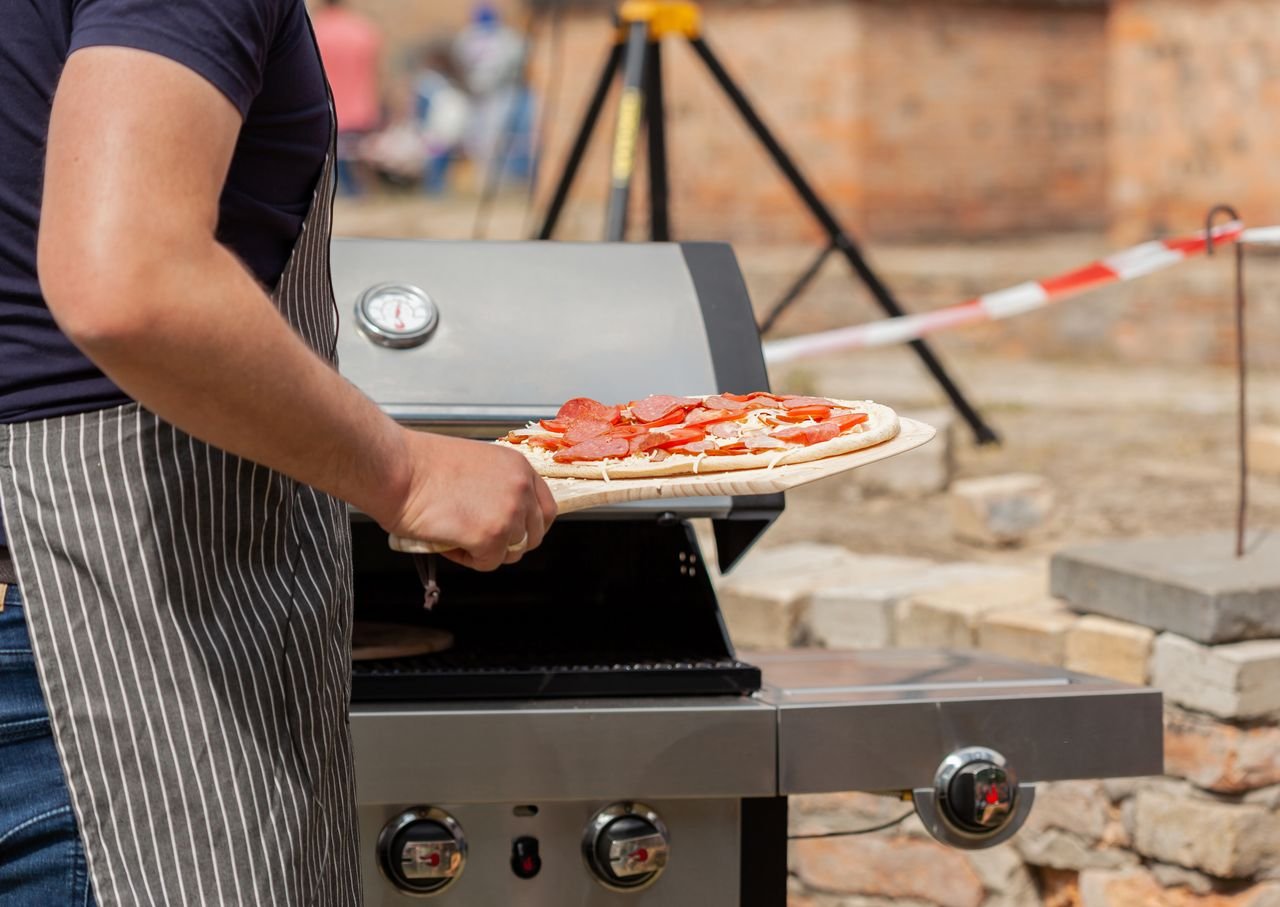
Two households, same Saturday night craving. In the first, someone wheels a pizza oven out to the patio, twists a knob, and twelve minutes later there’s flame-kissed pizza on the table. In the second, the oven never left the kitchen counter — it preheated while the dough was being stretched, and pizza happened without anyone going outside at all.
Neither of them bought the wrong oven. They bought for different lives. Gas and electric pizza ovens have quietly split into two camps, each genuinely good at different things, and the “best” choice has almost nothing to do with spec sheets. It has to do with where your pizza nights actually happen.
Heat and Bake: What Each Fuel Does Best
Gas ovens — running on propane or natural gas — reach serious temperatures, typically 450–500°C at the stone, and they get there in 15–20 minutes. That heat is the real thing: it produces the leopard-spotted crusts, blistered rims, and sub-two-minute bakes that define Neapolitan-style pizza. Flame licking across the oven roof also adds a faint kiss of combustion flavor that purists chase.
Electric ovens have closed the gap more than most people realize. Good countertop models now hit 400–450°C with dual heating elements that cook top and bottom evenly, and they hold temperature with a precision gas can’t match — set 380°C and it stays 380°C, which matters for styles beyond Neapolitan, from New York slices to flatbreads. What electric still can’t fake is live flame. If char and blister are your religion, that settles it; if even, repeatable bakes matter more, electric quietly wins.
Where Will This Oven Actually Live?
Be honest about your space, because this question eliminates half the options. A gas oven is an outdoor appliance. It needs ventilation, clearance from walls and fences, and a weather plan. A propane pizza oven at least frees you from a fixed gas line — the bottle makes it semi-portable, so it can travel to a holiday rental or a friend’s garden in the boot of a car.
Electric ovens live indoors, on the counter, powered by a normal socket. Apartments, rentals with no-gas rules, cold climates where February pizza night would otherwise mean standing outside in a coat — electric wins these addresses outright. The trade-off is size: countertop electrics usually cap out at 12–14 inch pizzas, while outdoor gas models commonly take 16-inch pies and feed a crowd faster.
Running Costs and Day-to-Day Hassle
A standard propane bottle fuels roughly 15–20 hours of pizza-oven time and swaps in two minutes at any hardware store; running cost per pizza night is small, but you do have to remember the bottle, check its level, and store it safely. Natural gas removes the bottle chore entirely if you have a line, at the price of fixing the oven’s location forever.
Electric is the zero-chore option. No fuel to buy, store, or run out of mid-evening — electricity costs per bake are comparable to running a kettle for a while, and the only failure mode is forgetting to switch it on. Cleaning differs too: electric ovens have smooth interiors and removable stones or trays, while gas burners and outdoor soot demand a bit more of a routine. If you’re still weighing the whole category, this broader look at choosing a pizza oven breaks the decision down by household type, budget, and pizza style.
What About Flavor — Is the Difference Real?
Yes, but smaller than the arguments suggest. In blind tastings, most people can pick out a gas-fired pizza by its char patterns and a faint roasted note along the rim — pleasant, but subtle, nothing like the smoke signature of real wood fire. If wood flavor is what you’re truly after, neither gas nor electric delivers it; you’d be looking at wood or pellet ovens instead, with their extra fuel handling and ash cleanup as the entry fee.
Electric’s flavor argument is different: consistency. Because the temperature doesn’t swing when you open the door or a breeze picks up, the bake is the same in January as in June, and sugars in the dough caramelize predictably. Plenty of excellent pizzerias run electric deck ovens for exactly this reason and lose nothing in the crust department. Flavor, in the end, is mostly temperature plus time plus good dough — the fuel is a supporting actor.
Noise, Neighbors, and the Stuff Reviews Skip
A few lifestyle details never make the comparison tables. Gas ovens roar a little and radiate serious heat — glorious in October, less welcome on a small balcony in August, and worth thinking about if your cooking spot is under a low awning. They also produce real combustion exhaust, so tight, enclosed patios are out. Electric ovens are quiet, comparatively cool to be around, and apartment-balcony friendly where rules allow any cooking appliance at all.
Portability cuts both ways. A compact gas oven is a single self-contained unit that works anywhere outdoors; an electric needs an outlet within cord’s reach, which quietly dictates where pizza night happens. And think about who else cooks: electric’s thermostat-and-done simplicity makes it far easier to hand pizza duty to a teenager or a nervous first-timer than a live-flame appliance.
The Quick Decision Guide
- Choose gas if: you have outdoor space, crave authentic high-heat Neapolitan results, cook for groups, or want the option of taking the oven on the road.
- Choose electric if: you live in an apartment or rental, cook indoors year-round, value set-and-forget temperature control, or want pizza on a weeknight with zero setup ritual.
- Choose neither (yet) if: you bake pizza twice a year — a steel in your existing oven will make you very happy for a fraction of the money.
Decide by the Pizza Night You Actually Have
The spec-sheet winner is a distraction. The right oven is the one that fits your space, your climate, and the style you cook most — because the best pizza oven is simply the one that gets fired up every week instead of admired twice a year. Picture your next ten pizza nights. Where are you standing, and what’s the weather doing? Answer that, and the gas-versus-electric question answers itself.
 Khizar
 Finixio Digital
 Engrnewswire