
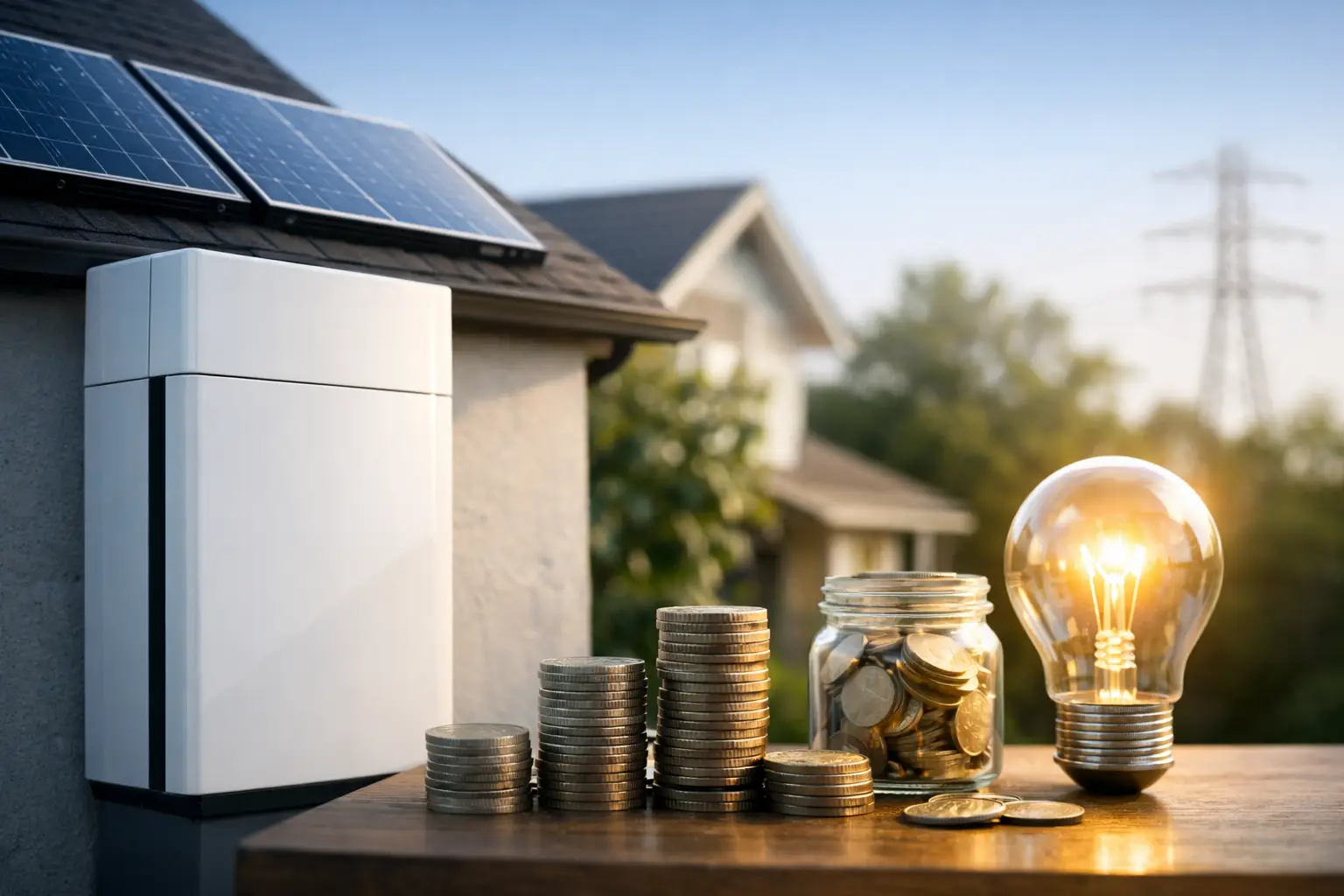
As autumn arrives in the UK, the days become noticeably shorter. The sun sets earlier, temperatures drop and households often start using more electricity in the evening for lighting, cooking, heating and entertainment.
For homes with solar panels, this creates a familiar problem: solar generation is highest during the daytime, while household electricity demand often increases after the sun has gone down.
This is where home battery storage can make a difference.
Why Evening Electricity Use Matters More in Autumn and Winter
During the summer months, a solar PV system can generate electricity for much of the day, sometimes producing more energy than a household needs at the time.
But the situation changes as the seasons progress.
By late afternoon and early evening, solar generation can fall significantly just as households start switching on lights, preparing dinner, using appliances and heating their homes.
Without battery storage, surplus solar electricity may be exported to the grid, while electricity is purchased again later when solar generation is low.
A home battery provides another option: store some of the electricity generated during the day and use it when the household needs it most.
Store Solar Energy During the Day, Use It in the Evening
The basic principle is straightforward.
During daylight hours, solar panels generate electricity. Household appliances can use the power directly, while surplus generation can be directed towards battery storage.
When the sun sets and solar production decreases, the stored energy can then be used to help power the home.
For example, electricity stored during the afternoon could potentially support evening lighting, cooking, entertainment or other household loads.
This can reduce the amount of electricity that needs to be purchased from the grid during those hours.
The actual savings will depend on factors such as solar generation, household consumption, battery capacity, electricity tariffs and how the system is managed.
Battery Capacity and Solar Input Both Matter
When choosing a home battery, capacity is only one part of the picture.
A battery with a 2.5kWh-class capacity, for example, may be suitable for households looking to shift part of their daytime solar generation into the evening. But the battery also needs to work effectively with the home’s solar system.
The Conow Lyra 2500 Pro is designed around this principle, combining a 2560Wh LFP battery with a 2400W PV input and a 1500W bi-directional inverter.
Its four MPPT inputs are designed to help manage solar input from multiple PV sources, while the bi-directional inverter allows energy to move between the battery and household electrical system.
For households considering balcony solar or smaller-scale residential energy storage, this type of combination can provide more flexibility than simply looking at battery capacity alone.
Could Dynamic Electricity Tariffs Make Battery Storage More Useful?
Solar generation is only one part of the equation. Electricity prices can also vary depending on the tariff.
Some UK households now have access to time-of-use or dynamic electricity tariffs, where electricity prices can change throughout the day.
This creates another potential opportunity for battery storage.
Instead of relying entirely on electricity from the grid during every high-price period, a smart energy system can consider when electricity is cheaper and when household demand is higher.
For a home with solar panels, the battery can potentially be charged using surplus solar generation during the day. Depending on the tariff and system settings, stored energy can then be used later when electricity prices or household demand are higher.
This does not mean every household will achieve the same level of savings. Tariff rates, usage patterns, export arrangements and battery efficiency all need to be considered.
Making Battery Storage More Hands-Off
One of the challenges of managing home energy is knowing when to charge, when to discharge and when to use electricity from the grid.
This is where energy management systems can become useful.
The Conow Lyra 2500 Pro includes AI HEMS and is designed to work with more than 1,000 dynamic tariffs. Rather than requiring homeowners to manually monitor electricity prices and solar generation throughout the day, the system is designed to help coordinate energy use around changing conditions.
For busy households, automation can be particularly useful during autumn and winter, when daylight hours are shorter and energy consumption patterns can change significantly.
Preparing for the Darker Months
Battery storage is not simply about having electricity available after sunset. It is about changing when energy is used.
Solar panels generate electricity when the sun is available. A battery can help move some of that energy from the middle of the day into the evening.
For UK households approaching the darker months, this can be an important consideration when looking at ways to make better use of existing solar generation.
The Conow Lyra 2500 Pro, with its 2560Wh LFP battery, 2400W PV input, 1500W bi-directional inverter and four MPPTs, is designed to support this type of flexible home energy setup.
As evenings become longer and household electricity demand shifts towards later hours, combining solar generation with battery storage and smarter energy management could help homeowners make better use of the electricity they generate and reduce their reliance on grid electricity at certain times.
The key is not simply generating more energy, but making better use of the energy already available.